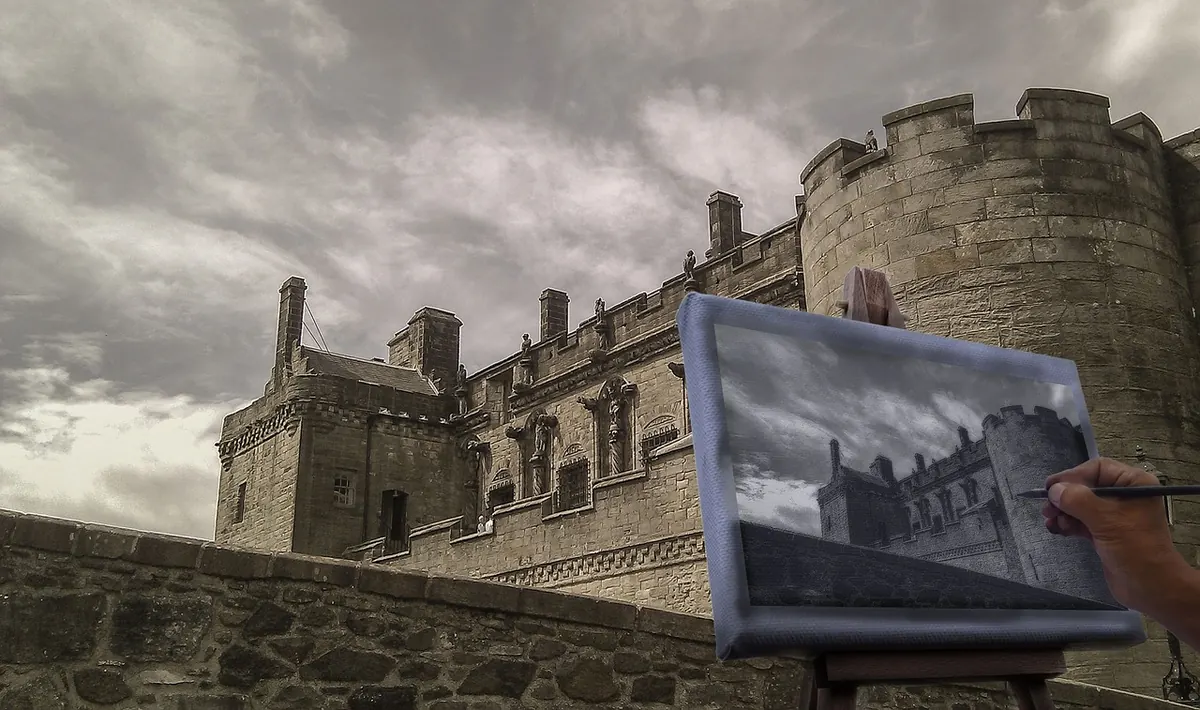
Plein air sketching punishes the unprepared quite gently at first, then all at once. You find the spot, the light is doing something worth catching, and then you discover that your water pot has leaked through the sketchbook, the wind is lifting your paper, and the pencil you need is at the bottom of a bag you now have to unpack in a hedge. A portable kit is not about owning clever things. It is about carrying a small, proven set that lets you start drawing within a minute of stopping.
Before you buy anything, decide how you usually work outdoors. Standing at a wall or a railing with the book in one hand and a brush in the other is the lightest option, and it suits quick studies. Sitting on a bench or a folding stool gives you more control and lets you work larger. Sitting on the ground is comfortable for about eleven minutes, after which your foot goes to sleep and your lines go strange.
That decision shapes everything else. Standing work needs a bag you can open with one hand, ideally a shoulder bag that swings round to your front. Seated work can justify a small rucksack, but weight matters more than clever pockets. Fill a bag with every just-in-case item and you will stop carrying it, which is the only real failure mode in plein air kit.
Paper decides whether you enjoy the outing. For dry media, almost anything works. For watercolour, look for a hardback book of at least 200gsm, or 300gsm if you want to lay in wet washes without the sheet buckling into a landscape of its own.
A few specifics worth knowing:
Take a second, smaller book for thumbnails. Two or three tiny pencil studies before you commit to a page will improve the finished drawing more than any upgrade to your brushes.
A half-pan set in a metal tin is the sensible starting point. The lid becomes your mixing palette, the pans do not leak, and a tin of twelve colours will last years. You do not need twenty-four. A workable beginner palette is a warm and a cool version of each primary, plus a couple of earths: a lemon or hansa yellow, a warm red, a magenta or cool red, ultramarine, a phthalo or cerulean blue, burnt sienna, and yellow ochre.
Tubes have their place, but squeezing them outdoors is a mess waiting to happen. If you prefer the intensity of tube colour, decant small amounts into a pill organiser or a spare tin and let it dry out. Re-wetting dried watercolour is normal and does it no harm.
Watercolour pencils are a genuinely useful lightweight option: draw dry, then brush water over the marks. They also behave better than pans in cold weather, when your fingers are stiff and fine brushwork is a losing battle. Whichever you choose, let pans dry before you close the tin. A damp palette left shut for a week grows things.
Do not buy an easel first. Most beginners get more out of a firm board, a couple of clips, and their own knees. If you do want one, a folding aluminium tripod easel is the usual answer for sketchbook work; look for something light enough to carry for an hour without noticing, and check that it holds your book at a comfortable angle rather than flat on the ground.
Pochade boxes and tripod-mounted boards are lovely and heavy. They suit painters who drive to a viewpoint and work for two hours, not sketchers who walk. Match the support to the outing, not to the photographs on the box.
British weather does not usually stop a sketch; it just changes it. A few small habits cover most of it.
Line the bag with a dry bag or a heavy plastic sack. Keep paper in a plastic wallet so a wet book does not buckle before you have made a mark. If rain is likely, work under a porch, an archway or a bridge, and save the exposed headland for a dry day. A folding umbrella is more useful than a waterproof jacket hood, because your paper stays dry too.
Wind is the greater nuisance. Clip your page at two corners, not one. On loose sheets, tape the back. If you work on a bench, a couple of smooth stones or a water bottle on the far edge hold everything down. Pencil and waterproof fineliner cope better than soft graphite in a breeze.
Work in shade, not sun. Glare makes your paper look brighter than it is, so you paint too dark and arrive home with a different picture. Sun cream on your hands will transfer to the paper, so apply it early and wipe your palms. In cold weather, thin gloves with the fingertips cut off keep your hand working for an extra half hour; a cloth for drying brushes is worth its weight in every season.
Choose somewhere five minutes from a bus stop or a car park, with a bench, a wall and something simple in front of you: a tree, a gate, a bridge, a row of chimney pots. Give yourself half an hour and no ambitions. Two thumbnails and one small drawing is a good session. Keep the kit packed and by the door between trips, because a bag that needs assembling will always lose to the weather forecast. Sketch on public ground, ask before you linger on private land, and take your litter home with you.
Photo: 733215 / Pixabay